Concrete cooling system
• During condensation and solidification process of concrete, hydrated cement produces a large amount of hydration heat. When the heat accumulates, the temperature inside the concrete will accelerate to rise. The concrete structure is thick and large, which has low thermal conductivity and makes the heat hard to emit from the surface, therefore, the temperature difference between the inside and the outside of the concrete is excessive, besides in the early period tensile stress of concrete is weak and elasticity modulus is small, all that creates a certain of tensile stress on the concrete surface . When that tensile stress excesses the current concrete ultimate tensile strength of inside and outside concrete, the concrete surface will crack due to the temperature difference.
• In order to prevent concrete cracking, in addition to the rational proportion of all materials, construction procedure and maintenance, the most effective method is artificially temperature reduction, namely, pre-cooling the aggregate and mixing the concrete with cold water and flake ice to reduce the concrete out feeding temperature, that is the best way to control and reduce concrete pouring temperature.
•For mass concrete, expect controlling concrete pouring temperature, there is another auxiliary way by pre-embedding water pipe inside concrete to cool down concrete inner temperature by cooling water.

Concrete cooling system- ice plant application
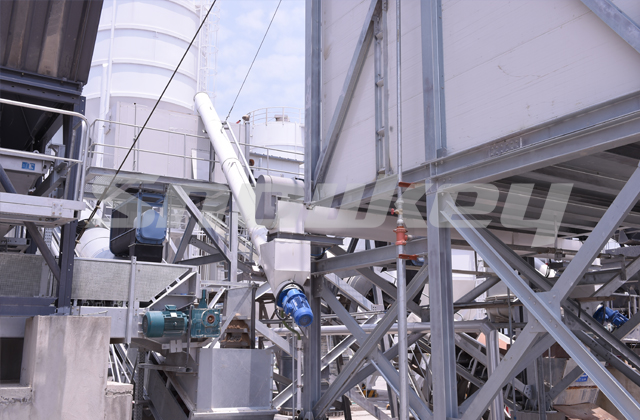
Ice delivery and ice weighing

Delivery ice to belt conveyor
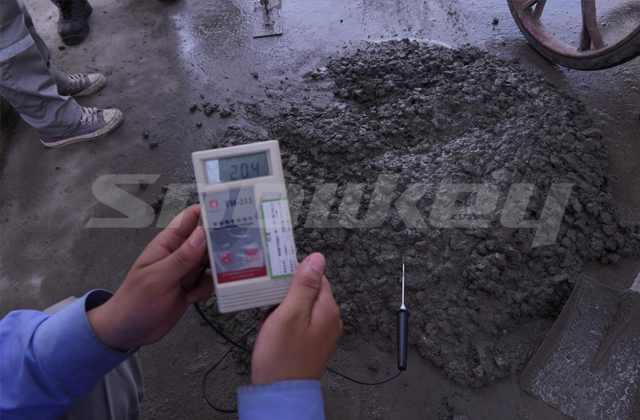
Concrete outlet temperature test
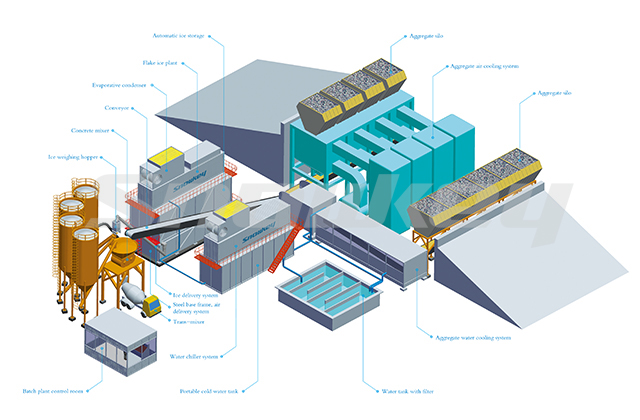
Modular concrete cooling system engineering drawing :
- Since Fujian Snowman Co.,Ltd founded at 2000, growing up step by step, and because a globalization enterprise specializing in producing ice machines, cooling equipment and cold storage, especially in ice machine and concrete cooling system field. Snowman own the contribution in this field with the market share in the top 1 in China, and in the leading position around the world.
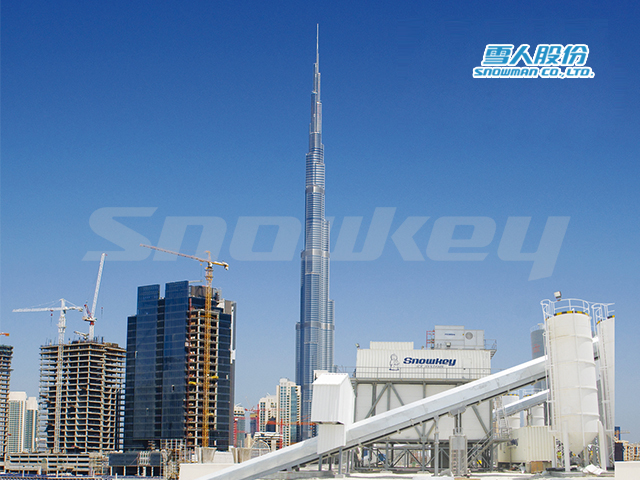
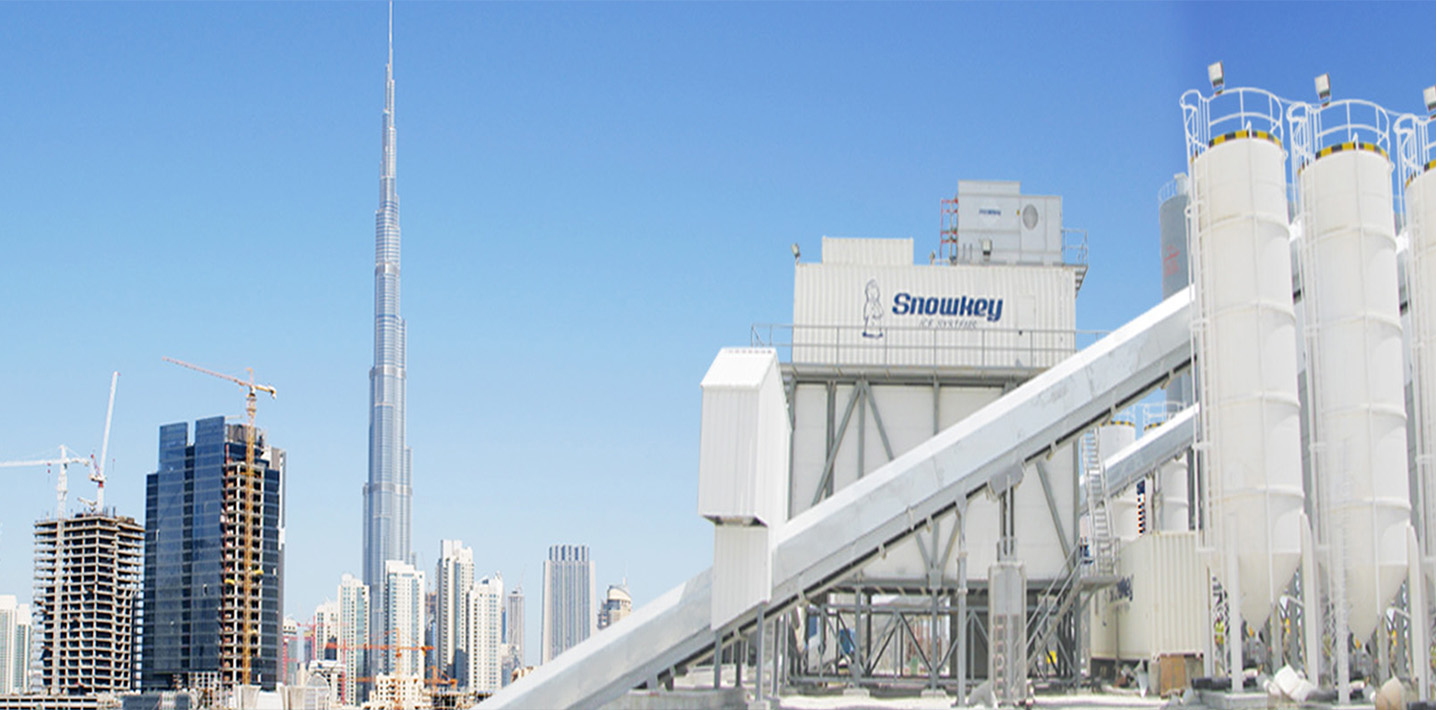
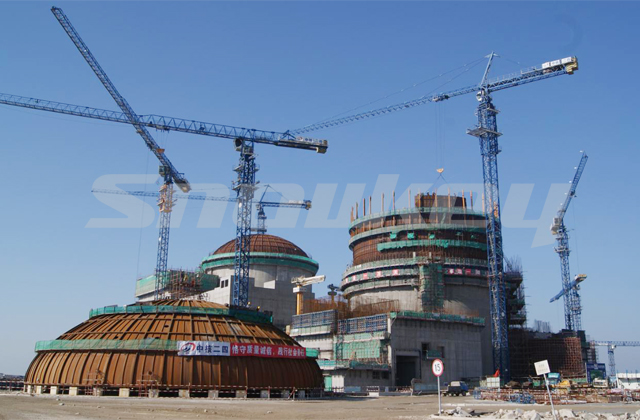
- Fujian snowman Co., Ltd have supplied more than 1500 units concrete cooling system working around the world. So far the projects Snowman involved in every corner of the world, such as: Al Halifa tower(the global toppest building in Dubai), south to north railway construction project in KSA, city light railway in Makkah KSA, Doha port, Sanmen unclear power station in Zhejiang province China, nuclear power station in FuQing China, nuclear power station in Qinshan China, nuclear power station in Haiyang China, hydro-power station in Guandi China, hydro-power station in Brazil, Hongkong&Zhuhai&Macao Bridge.
- Milk
Concrete cooling system general Constitution:
- Aggregate cooling system (air-cooling and water cooling)
- Cold water and placed after water cooling system (CW≤5℃)
- Ice water system
- Ice making system(15~106Tons/day)
- Ice storage(AIS8~150Ton)
- Ice delivery and ice weighing system(TSL.ID.LWT.QWT...)
- water tanks and steel frame